



The 2026 Polestar 4 Performance Pack: A Calculated Gamble on Automotive Innovation
The automotive landscape is in a state of perpetual flux, and the electric vehicle (EV) sector, in particular, is a crucible of innovation. Standing at the forefront of this electrifying revolution is Polestar, a brand that has consistently pushed the boundaries of design and performance. With the highly anticipated Polestar 5 on the horizon, the current flagship, the 2026 Polestar 4, steps into the spotlight, presenting a bold, perhaps even audacious, redefinition of the modern luxury EV. This isn’t just another electric crossover; it’s a statement piece that melds Scandinavian design ethos with supercar-rivaling performance, all while daring to introduce a feature that has become one of the most debated in the entire automotive segment: the complete absence of a traditional rear window.
My tenure with the 2026 Polestar 4, particularly with the optional Performance Pack, has been a revealing journey. For a full week, I navigated the sprawling urban tapestry of Los Angeles, a city synonymous with traffic, discerning tastes, and a keen eye for automotive trends. While my initial encounter with the Polestar 4 at its international debut nearly two years ago, and later during an exhilarating sideways ice-drifting session above the Arctic Circle, focused heavily on its more unconventional aspects, this extended period of daily driving allowed for a deeper, more nuanced understanding of its capabilities and compromises. The question lingers: does a single, polarizing design choice fundamentally detract from an otherwise exceptional vehicle?
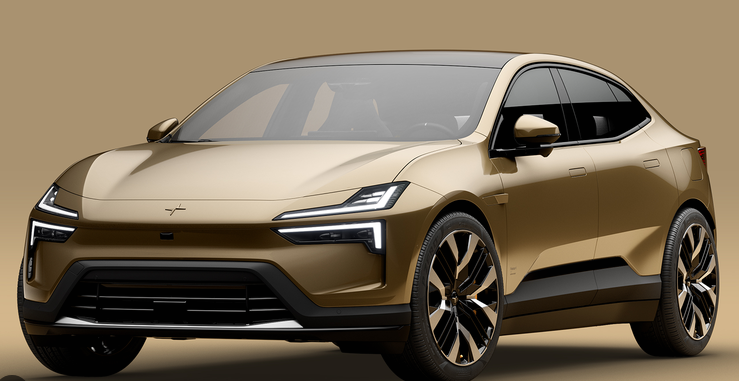
Polestar, a marque spun from Volvo’s rich heritage, has strategically positioned the Polestar 4 as a distinct entity, sharing its underpinnings with Geely, the Chinese conglomerate. This technical divergence sets it apart from the larger, more Volvo-centric Polestar 3. The result is a crossover that sits 3.7 inches lower, establishing a clear, albeit subtle, differentiation in the lineup and avoiding direct cannibalization. My fully optioned tester, a Long Range Dual Motor variant, was kitted out with the Pilot, Plus, and crucially, the Performance Packs. The latter, a $4,500 investment, is where the heart of the 4’s dynamic prowess lies. It promises retuned suspension, gargantuan 22-inch wheels cradling vibrant gold Brembo brake calipers, and a thematic extension of this striking aesthetic with matching gold seatbelts and valve stem caps.
It’s this attention to detail, the unexpected yet cohesive application of gold against the backdrop of what could be perceived as austere Scandinavian minimalism, that truly elevates the Polestar 4’s visual appeal. Polestar has an undeniable knack for selecting captivating color palettes and tactile materials. My loaner’s lightly metallic “Electron” blue paintwork was stunning, and the interior, clad in a pale white “Zinc” Nappa leather, exuded a palpable sense of luxury. It’s important to note that the Performance Pack, while a significant visual and handling upgrade, does not contribute any additional horsepower. The same potent dual-motor setup, comprised of a 200-kilowatt motor at the front and another at the rear, combines to deliver a formidable 544 horsepower and 506 lb-ft of torque. Polestar quotes a brisk 0-60 mph time of just 3.7 seconds, a figure that feels conservative when you experience the surge of acceleration firsthand.
The initial prod of the accelerator pedal in the Polestar 4 is nothing short of visceral. The instant, brutal torque delivery is a hallmark of high-performance EVs, and the Polestar 4 delivers it with unreserved gusto. Acceleration is almost absurdly potent, propelling this four-door machine to highway speeds and well beyond with an alacrity that borders on unsettling. Yet, the Performance Pack’s true genius lies not just in straight-line acceleration, but in its meticulous chassis tuning and the optimized grip afforded by those larger wheels. The emphasis here is squarely on handling, transforming the Polestar 4 from a potent straight-line missile into a remarkably capable handler.
The low-slung profile of the Polestar 4, with its modest 6.5 inches of ground clearance, contributes significantly to its athletic demeanor. It’s easy to forget, while cornering with such confidence, that this EV likely tips the scales at well over 5,000 pounds, with its substantial 100 kWh battery pack accounting for the lion’s share of that mass. Polestar’s steering, while perhaps a touch anesthetized for some purists, strikes a fine balance, providing just enough feedback to instill confidence without overwhelming the driver. This allows the Polestar 4 to navigate congested city streets and carve through winding canyon roads with a fluidity and pace that consistently surprises.
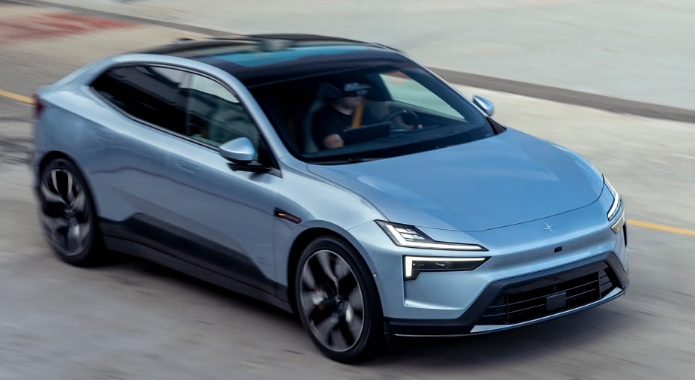
Despite its sporty aspirations and performance credentials, the Polestar 4’s interior spaciousness remains one of its most compelling attributes. As a six-foot-one individual with long limbs, I found ample room to position the driver’s seat comfortably, with no need to recline it excessively. Crucially, even with the driver’s seat pushed fully back, rear-seat legroom remained remarkably generous. This is where the much-discussed design decision of eliminating the rear window begins to reveal its functional rationale.
Polestar’s justification for omitting the rear window centers on interior packaging. By eliminating the physical glass and its associated structural bracing, the roofline can extend further back, creating significantly more headroom for rear-seat occupants. And indeed, adult passengers can comfortably occupy the rear seats without feeling at all cramped, all while maintaining a respectable amount of trunk space behind them. However, the external visual is undeniably striking, and for some, the blank expanse where a window should be can feel like a design compromise, a visual anomaly that clashes with the otherwise sleek silhouette. It’s a curious irony that the very sensors necessitated by the absence of a rear window now occupy that now-blank canvas, precluding any potential future retrofit.
From a practical standpoint, in a car as rapid as the Polestar 4, the reliance on the traditional rear-view mirror for constant monitoring is diminished. My own driving habits, honed by years behind the wheel of supercars and large pickup trucks, have accustomed me to digital rearview mirror systems. Polestar integrates a high-definition camera feed into the interior mirror, augmented by additional cameras that activate during reversing or when engaging turn signals. This multi-camera approach aims to mitigate the considerable blind spot created by the absence of a rear window. While it’s not a perfect substitute for a clear pane of glass, it’s a remarkably effective workaround. My primary moments of cognitive dissonance occurred during stop-and-go LA traffic, when an instinctive glance over my shoulder before a lane change would be met with a dark, featureless void, briefly disorienting my brain. Learning to trust the technology becomes paramount.
This reliance on technology extends to other areas of the Polestar 4 experience, showcasing a level of technological integration that is both impressive and, at times, a touch frustrating. The key, for instance, is a small, buttonless black rectangle. The intended functionality is proximity-based unlocking and locking, a seamless interaction with the vehicle. However, my experience was somewhat inconsistent, with the car recognizing the key perhaps half the time. The absence of any physical buttons means that when the system falters, the only recourse is to retrieve the key from your pocket and perform a rather awkward proximity gesture near a designated spot on the B-pillar. It’s a scenario where one is forced to “trust the tech,” or perhaps, as I discovered, download Apple CarPlay to my iPhone for a more reliable unlocking method. CarPlay itself proved somewhat temperamental, connecting only intermittently.
Fortunately, Polestar’s generously sized 15.4-inch central touchscreen, powered by Google’s intuitive operating system, largely compensates for these minor connectivity quibbles. I was able to easily save my seating position preferences, configure shortcuts on the home screen, and crucially, dedicate the 10.2-inch driver’s instrument cluster to displaying navigation information. This proved essential, as the 360-degree surround camera views would automatically activate when signaling a turn, temporarily obscuring any directions displayed on the central screen.
The drive settings menu became my most frequented digital destination. Polestar offers an extensive suite of customization options, allowing drivers to fine-tune nearly every aspect of the 4’s power delivery and handling characteristics. I spent considerable time experimenting, seeking the optimal balance between everyday comfort and spirited driving. For daily urban commuting, I gravitated towards the lightest steering feel, the softest suspension setting, full one-pedal regenerative braking, and the maximum range configuration – a predictable preference. However, even when pushing the car to its performance limits, I often retained the lightest steering mode, paired with the firmest suspension setting. This combination seemed to unlock the car’s inherent nimbleness, effectively counteracting the latent impression of mass that a firmer steering setting could sometimes amplify.
Throughout my week with the Polestar 4, I consistently utilized the one-pedal regenerative braking and kept the creep function disengaged. This strategy was primarily aimed at maximizing range, as the Dual Motor variant achieves an EPA-estimated 280 miles. While this figure is more than adequate for city driving and occasional weekend excursions, it falls slightly short of the range offered by key competitors like the Tesla Model Y Long Range, a vehicle likely to be a significant cross-shopping candidate for many potential Polestar 4 buyers. I can attest to the onboard range estimator being remarkably generous throughout my testing period. However, to be transparent, I intentionally avoided a longer round trip to San Diego, opting to forego the potential need for a public charging stop. Consequently, I did not have the opportunity to test the claimed 30-minute 10-80% charging time. As always, my recommendation for EV ownership remains contingent on reliable home or workplace charging infrastructure, mitigating reliance on the often-inconsistent public charging network.
The arrival of the Polestar 5 later this year promises a significant leap forward in both power and range, thanks to its adoption of an 800-volt architecture, a substantial upgrade from the 4’s 400-volt system. This technological advancement will position the Polestar 5 to compete more directly with the upper echelons of Lucid Air models, signaling a likely price point well into six figures. In contrast, my fully optioned Polestar 4, with every conceivable box checked, arrived with a total price of $80,800, an increase from the $62,900 base MSRP for the Dual Motor layout, which includes the no-cost Pilot Pack. The Plus Pack, a $5,500 addition, further enhances the cabin experience with excellent massaging front seats, reclining rear seats, three-zone climate control, a power tailgate, and numerous other amenities.
Among the optional extras, the electrochromatic tinting roof glass, priced at $1,500, is an addition I would strongly advocate for. The ability to darken the glass at the touch of a button offers a tangible benefit for EVs, where climate control, particularly air conditioning, can significantly impact range. It’s a feature that exemplifies Polestar’s underlying philosophy: leveraging advanced technology to help owners seamlessly adapt to and optimize their electric vehicle lifestyle. While the larger Polestar 3 may serve as the more conventional workhorse in the lineup, for those who embrace cutting-edge technology and crave exhilarating supercar performance, the Polestar 4 stands as a compelling and undeniably exciting proposition within Polestar’s rapidly expanding electric vehicle portfolio.
The 2026 Polestar 4, particularly with the enhancements of the Performance Pack, represents a calculated and ambitious step forward in the evolution of the luxury EV. It’s a vehicle that demands consideration, not just for its speed and style, but for its willingness to challenge established norms. If you’re intrigued by the prospect of driving a vehicle that blurs the lines between avant-garde design and exhilarating performance, and you’re ready to embrace a truly modern automotive experience, then the Polestar 4 deserves a closer look.
Explore the innovative design and electrifying performance of the 2026 Polestar 4 today. Visit your nearest Polestar retailer or schedule a personalized test drive to experience this groundbreaking electric luxury crossover firsthand.