



Polestar 4 Performance Pack: A Bold Vision For the Electric Future, Redefined
The electric vehicle landscape is evolving at a blistering pace, and with it, the very definition of luxury and performance in automotive design. As we navigate the exciting developments of 2025, Polestar continues to push boundaries, presenting a compelling, albeit unconventional, vision with its Polestar 4. This meticulously crafted crossover, positioned as the flagship until the eagerly anticipated Polestar 5 debuts, represents a striking departure from the norm, blending Scandinavian design principles with exhilarating, supercar-rivalling performance. But it’s a single, highly debated design choice that truly sets the Polestar 4 apart, prompting a closer examination of how innovation intersects with practicality in the modern luxury EV segment.
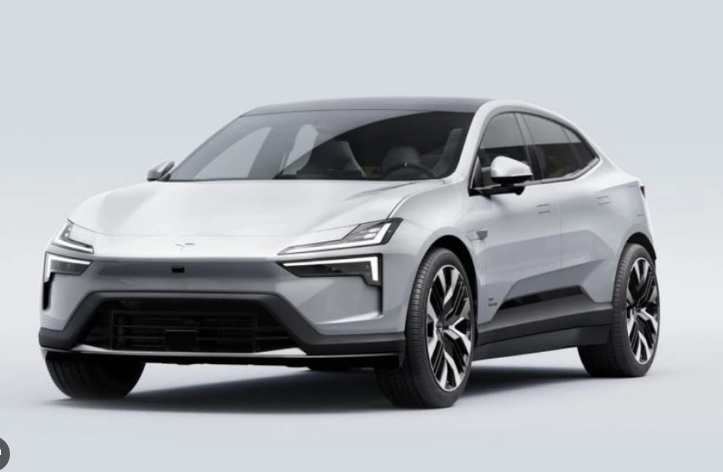
The Polestar 4’s journey began with international production commencing in 2023, but its arrival for the 2026 model year here in the United States marks a significant moment. Visually, the Polestar 4 is a masterpiece of understated futurism. It manages to be both sleek and subtly muscular, drawing inspiration from minimalist Scandinavian aesthetics while hinting at the dynamic prowess found in performance machines. Its proportions evoke a sense of purpose, a low-slung silhouette that belies its inherent practicality as a crossover. The exterior design is a testament to Polestar’s commitment to a clean, modern aesthetic, a philosophy that permeates every facet of the vehicle.
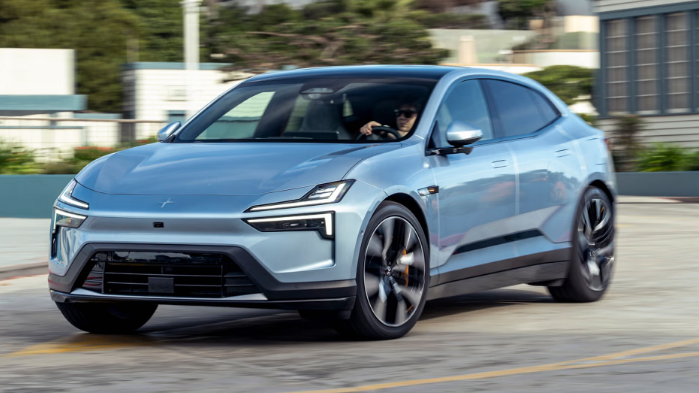
However, the most significant talking point, the one that has generated considerable discussion and even controversy, is the deliberate omission of a traditional rear window. Polestar articulates this bold design decision as a means to maximize rear passenger headroom, a crucial element for enhancing the interior comfort of this luxurious EV. Yet, this audacious stylistic statement inevitably raises a fundamental question: can a single design choice, however innovative, overshadow the otherwise exceptional qualities of a vehicle?
My initial encounter with the Polestar 4, at its international launch in Madrid nearly two years ago, was indeed dominated by this unique rear-end treatment. More recently, however, a full day of exhilarating sideways action on a frozen lake above the Arctic Circle in Sweden offered a different perspective, one where the car’s dynamic capabilities took center stage. Now, with the 2026 Polestar 4 readily available on American shores, I spent a week navigating the bustling streets of West Los Angeles, eager to ascertain if extended daily driving would indeed foster an acceptance, perhaps even an appreciation, for this unconventional design.
The Polestar 4’s underpinnings are distinct from its larger sibling, the Polestar 3, which shares a chassis more directly with Volvo models. Instead, the 4 is built upon a platform co-developed with Geely, a significant Chinese automotive conglomerate. This divergence allows the Polestar 4 to sit 3.7 inches lower than the Polestar 3, strategically positioning it to avoid direct competition and cater to a slightly different market segment. My test vehicle, a Long Range Dual Motor variant, was fully equipped with the Pilot, Plus, and Performance packs. It is the Performance pack, in particular, that elevates the driving dynamics, featuring a retuned suspension, imposing 22-inch wheels, and striking Brembo brake calipers finished in a distinctive gold hue, a theme echoed in the gold seatbelts and matching valve stem caps.
While gold accents might seem antithetical to the stark simplicity of Scandinavian design, in the context of the Polestar 4, they paradoxically enhance its aesthetic appeal. Polestar’s mastery of interior and exterior color palettes and textures is consistently impressive. My loaner’s lightly metallic “Electron” blue exterior paint was beautifully complemented by a pale white “Zinc” Nappa leather interior. It’s important to note, however, that unlike some performance-oriented packages in other vehicles, the Polestar 4’s Performance pack, while visually aggressive, does not contribute any additional power. The same dual-motor setup, with 200-kilowatt motors powering both the front and rear axles, delivers a formidable combined peak output of 544 horsepower and 506 lb-ft of torque. Polestar claims a breathtaking 0-60 mph acceleration time of just 3.7 seconds for this configuration.
The experience of engaging the Polestar 4’s acceleration is nothing short of electrifying. The instant surge of torque characteristic of high-performance electric vehicles is profound, almost visceral. It pins you back in your seat, catapulting this four-door sedan to highway speeds and well beyond with astonishing alacrity. Yet, the true brilliance of the Performance pack lies not just in its straight-line speed, but in the meticulous chassis tuning and larger wheel and tire combination that prioritize an engaging, dynamic handling experience above all else.
The Polestar 4’s low-slung design, with a ground clearance of 6.5 inches, contributes to an almost deceptive sense of lightness. Despite its substantial 100 kilowatt-hour battery pack, which accounts for a significant portion of its mass, the vehicle maneuvers with a remarkable nimbleness. This agility is further enhanced by Polestar’s intentionally calibrated steering system. While it offers a refined and predictable feel, it also allows the Polestar 4 to carve through traffic and navigate winding canyon roads with an almost unbelievable level of confidence and speed.
Despite its sporty aspirations, the interior spaciousness of the Polestar 4 remains one of its most commendable attributes. As a six-foot-one driver with long limbs, I found ample legroom, even without adjusting the driver’s seat to its furthest setting. Crucially, even with the driver’s seat positioned for optimal comfort, there remained an impressive amount of rear-seat legroom. This is where the absence of the rear window plays a direct role, allowing for a more generous cabin architecture.
The fundamental rationale behind eliminating the rear window, as articulated by Polestar, is to reposition the roof’s internal safety structure further rearward. This, in turn, liberates valuable space, significantly enhancing headroom for rear-seat occupants. Indeed, adult passengers can comfortably occupy the rear seats, and this spatial gain has been achieved without unduly compromising the cargo volume in the trunk. However, from an external perspective, the smooth, unadorned panel where a window would typically reside can feel somewhat incongruous. Ironically, this very area now houses various sensors essential for the advanced safety systems necessitated by the rear window’s absence, making a retroactive installation of a traditional window an impossibility.
In a vehicle with the Polestar 4’s performance capabilities, the reliance on a traditional rear-view mirror is perhaps less critical than in a more sedate vehicle. Many drivers accustomed to high-performance cars or larger utility vehicles have already adapted to digital rearview mirror systems. Polestar’s implementation is sophisticated, integrating a primary rearview camera with multiple additional camera feeds that activate during reversing or when signaling for a lane change. These systems work in concert to mitigate the substantial blind spot created by the unconventional rear design. While it doesn’t perfectly replicate the clarity of a glass window, it is a remarkably effective compromise. My own moments of cognitive dissonance typically occurred during aggressive urban driving, when a quick glance over my shoulder before a lane change would be met with a void in my peripheral vision, momentarily disconcerting my ingrained reflexes.
Learning to trust the technology is paramount with the Polestar 4. Polestar, drawing upon its Volvo heritage, has integrated redundant safety systems, underscoring a commitment to robust engineering. However, the Polestar 4 also ventures into territory where it attempts to reinvent aspects of the technological user interface, sometimes to a degree that feels unnecessary. The key, a small, buttonless black rectangle, is a prime example. While it’s designed to unlock the car upon proximity, its reliability was inconsistent during my testing. The absence of a physical backup, like buttons, meant I often resorted to manually activating the key by holding it near a designated spot on the B-pillar.
This is where embracing the digital evolution becomes essential. Utilizing Apple CarPlay via my iPhone proved to be a more seamless unlocking and locking experience, a testament to the growing integration of personal devices with vehicle access. Apple CarPlay connectivity itself, however, also experienced occasional glitches, connecting only about half the time. Fortunately, Polestar’s large, 15.4-inch central touchscreen, powered by Google’s integrated apps, functions with commendable fluidity. I was able to easily save my preferred seating positions, configure personalized shortcuts on the home screen, and crucially, set the 10.2-inch digital gauge cluster to display navigation. This was particularly important, as the 360-degree surround camera views, which activate when using the turn signals, would otherwise obscure critical navigation prompts on the center screen.
The most frequently accessed menu page for me was the drive settings. Polestar offers an extensive array of customization options, allowing drivers to precisely tailor the vehicle’s power delivery and handling characteristics. I dedicated considerable time to experimenting with various combinations, seeking the optimal balance for both comfortable daily driving and spirited excursions. For urban environments, I gravitated towards the lightest steering setting, the softest suspension, full one-pedal regenerative braking, and the maximum range setting. Unsurprisingly, for more aggressive driving, I retained the lightest steering mode but opted for the firmest suspension setting, coupled with full power delivery. This configuration amplified the vehicle’s nimbleness, counteracting any perceived directness from the EV’s inherent mass and sharpening its responsiveness.
Throughout my testing, I consistently kept one-pedal regeneration engaged and the creep function disabled. This strategy, aimed at maximizing efficiency, is particularly relevant given the Polestar 4 Dual Motor’s EPA-estimated range of 280 miles. While this is more than adequate for daily commutes and spontaneous weekend adventures, it is slightly less than that offered by some direct competitors, such as the Tesla Model Y Long Range, a vehicle many potential Polestar 4 buyers will undoubtedly consider. During my week of driving, the onboard range estimator proved consistently accurate. I did, however, opt to forgo a longer trip to San Diego and back to avoid any potential need for public charging. Consequently, I did not have the opportunity to test the claimed 30-minute 10-80% charging time. As always, my recommendation for electric vehicle adoption hinges on the owner’s ability to reliably charge at home or at their workplace, rather than depending on the often-unpredictable nature of public charging infrastructure.
The forthcoming Polestar 5 promises a significant leap forward in both power and range, thanks to its innovative 800-volt architecture, which will supersede the Polestar 4’s 400-volt system. This advanced architecture will position the Polestar 5 to compete more directly with the upper echelons of the Lucid Air lineup, suggesting a price point that will likely extend well into six figures. In stark contrast, my thoroughly equipped Polestar 4, with every option box checked, carried a price tag of $80,800, a considerable increase from the $62,900 base MSRP for the Dual Motor variant with the complimentary Pilot pack. The Plus pack, an additional $5,500, contributed significantly to the interior refinement, adding features such as exceptional massaging front seats, reclining rear seats, three-zone climate control, and a powered tailgate, among other amenities.
I would also strongly advocate for the optional electrochromatic tinting roof glass ($1,500). This feature, which allows for adjustable tinting at the touch of a button, is an almost essential addition for any electric vehicle where air conditioning usage can impact range. It represents Polestar’s thoughtful approach to integrating technology that empowers owners to adapt to and optimize their EV ownership experience. While the larger Polestar 3 may serve as the more pragmatic workhorse within the lineup, for those who crave cutting-edge technology and exhilarating performance, the Polestar 4 stands as a compelling and undeniably exciting proposition within Polestar’s rapidly expanding electric vehicle portfolio.
Ready to explore the future of electric driving? Discover the Polestar 4 and its revolutionary design for yourself. Schedule your personalized test drive today at your nearest Polestar retailer.