



Polestar 4 Performance Pack: Redefining the Luxury EV Landscape with Unconventional Daring
The automotive industry is in a perpetual state of evolution, and the electric vehicle (EV) segment, in particular, is witnessing a rapid acceleration of innovation. Amidst this dynamic landscape, Polestar, the performance-oriented electric vehicle arm of Volvo, continues to carve out its niche. As the highly anticipated Polestar 5 prepares to enter the fray later this year, the Polestar 4 stands as the current flagship, a bold statement in the luxury EV market. It masterfully blends striking Scandinavian design, performance that rivals supercars, and a feature so unconventional it has become a focal point of discussion: the complete absence of a rear window. This vehicle, with its focus on Polestar 4 performance, represents a significant step in the evolution of electrified luxury.
The Polestar 4, for the 2026 model year, has officially landed on United States soil after its international production commenced in 2023. This all-wheel-drive, dual-motor crossover promises an impressive 280 miles of EPA-estimated range. Stylistically, it walks a tightrope between sporty aggression and minimalist elegance. Its silhouette draws inspiration from futuristic Scandinavian design principles, yet subtly incorporates muscular proportions that might even evoke comparisons to performance SUVs like the Ferrari Purosangue. However, this sleek, futuristic aesthetic is inextricably linked to a single, highly debated design choice: the complete deletion of the traditional rear window. Polestar asserts this decision maximizes rear-seat headroom, a key consideration for passenger comfort, especially in a vehicle designed for spirited driving. Yet, it raises a pertinent question: can one design element, however distinctive, overshadow the many strengths of a meticulously engineered vehicle?
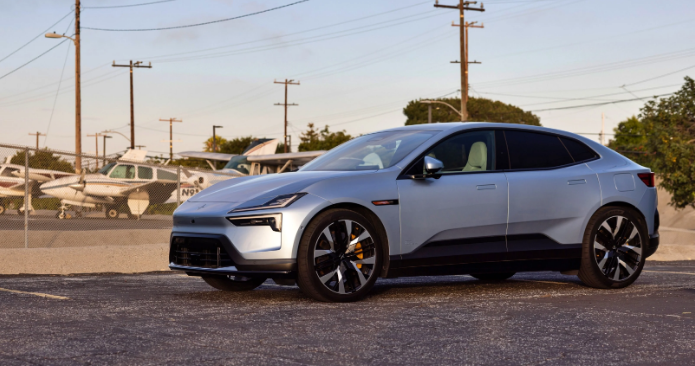
My initial encounter with the Polestar 4 at its international debut in Madrid nearly two years ago was heavily influenced by this controversial omission. More recently, however, a full day spent mastering sideways drifts on a frozen lake above the Arctic Circle in Sweden offered a different perspective, diminishing the focus on the rearward visibility. Now, with the Polestar 4 available on American shores, I had the opportunity to spend an extended period with a fully equipped loaner in the bustling urban environment of West Los Angeles. This extended test drive was crucial to understanding if prolonged exposure would allow for acclimatization to this unique feature and the overall driving experience of the Polestar 4.
The underlying architecture of the Polestar 4 is a departure from its larger sibling, the Polestar 3, which shares a more direct lineage with Volvo platforms. Instead, the Polestar 4 is built on a chassis co-developed with Geely, a significant player in the global automotive landscape. This results in a vehicle that sits 3.7 inches lower than the Polestar 3, a deliberate strategy to differentiate the two models and avoid direct market cannibalization. My test vehicle was the Long Range Dual Motor variant, extensively optioned with the Pilot, Plus, and Performance packs. The Polestar 4 Performance pack, in particular, is geared towards enhancing dynamic capabilities, boasting a retuned suspension, imposing 22-inch wheels enveloping Brembo brake calipers finished in a striking gold hue, and complementing gold seatbelts and valve stem caps.
While gold accents might seem at odds with the austere nature of Scandinavian minimalism, in the context of the Polestar 4, they surprisingly harmonize with the stellar interior and exterior design. Polestar’s penchant for sophisticated color palettes and tactile materials is evident throughout the cabin. My loaner’s lightly metallic “Electron” blue paint and the pale white “Zinc” Nappa leather interior were particularly appealing. Crucially, unlike the Polestar 2 and 3, the Performance pack on the 4 does not offer an uplift in power. The dual-motor setup, with 200-kilowatt units powering both the front and rear axles, delivers a combined peak output of 544 horsepower and 506 lb-ft of torque, enabling a claimed 0-60 mph sprint in a mere 3.7 seconds. This figure, while impressive, positions the Polestar 4 firmly in the realm of high-performance luxury EVs.
Engaging the accelerator of the Polestar 4 unleashes the signature, visceral surge of torque characteristic of potent electric vehicles. The acceleration is, without exaggeration, bordering on the absurd, propelling this four-door powerhouse to highway speeds – and considerably beyond – with astonishing rapidity. Yet, the Performance pack’s true strength lies not solely in straight-line speed, but in its meticulous chassis tuning and larger wheel specifications, which prioritize handling dynamics above all else.
The Polestar 4’s low-slung design, with a ground clearance of just 6.5 inches, contributes to an almost deceptive sense of agility. It’s easy to forget that this EV, which carves through corners with such apparent effortlessness, likely tips the scales at well over 5,000 pounds, with the substantial 100-kilowatt-hour battery pack accounting for a significant portion of that mass. Polestar’s approach to steering, which can feel somewhat muted or anesthetized, further reinforces a sense of controlled stability during spirited driving. This allows the Polestar 4 to navigate tight city streets or winding canyon roads at speeds that defy its substantial weight. This focus on Polestar 4 handling is a key differentiator.
Despite its sporty aspirations, the interior spaciousness remains one of the Polestar 4’s most compelling attributes. Even at six-foot-one with long limbs, I found ample legroom in the driver’s seat, with no need to fully extend it. Moreover, even if I had, it would not have impinged upon the rear-seat legroom – a direct testament to the design implications of the absent rear window.
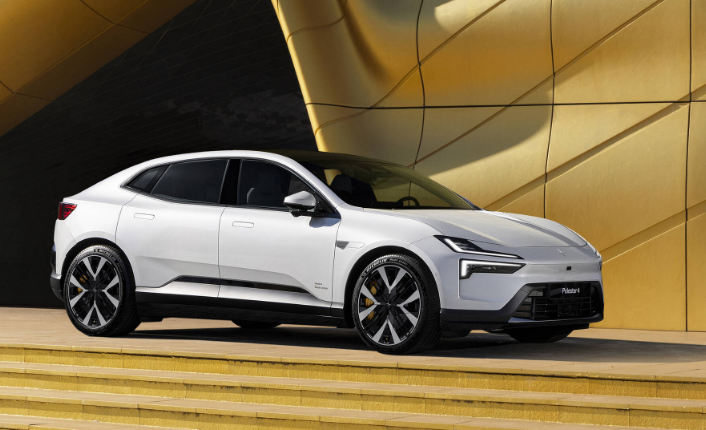
The strategic elimination of the rear window, as Polestar explains, was to allow for the roof’s internal safety structure to be positioned further rearward. This architectural change directly translates to enhanced headroom for second-row occupants. Indeed, the rear seats comfortably accommodate full-sized adults without significantly compromising trunk cargo volume. However, from an external perspective, the smooth, uninterrupted panel where a window would typically reside does detract from the conventional vehicle silhouette. Ironically, the necessary sensors for the advanced safety systems that compensate for the missing rear window now occupy this space, precluding any future retrofitting of a traditional window. This design choice for the Polestar 4 rear camera is central to its unique proposition.
In truth, with a vehicle as potent as the Polestar 4, the frequent reliance on the traditional rearview mirror is somewhat diminished. Having spent years navigating the automotive landscape in supercars and large pickup trucks, I’ve become accustomed to digital rearview mirror systems. Polestar integrates a primary rearview camera feed with multiple supplementary camera angles that activate during reverse maneuvers or when signaling a lane change, effectively mitigating the substantial blind spot. While not a perfect substitute for clear glass, it’s a surprisingly competent solution. My most frequent moments of cognitive dissonance occurred when navigating the notoriously challenging traffic of Los Angeles. A quick glance over the shoulder before a lane change would often trigger a momentary brain flicker at the unexpected dark void in my peripheral vision.
Learning to trust the technology is paramount. Polestar’s commitment to redundant systems reflects a quintessentially Volvo-esque dedication to safety engineering. However, the Polestar 4 also makes other critical design choices that, at times, feel like an unnecessary reinvention of the technological wheel. The key, for instance, is a small, featureless black rectangle. It lacks any buttons, relying solely on proximity detection to unlock the doors and present the flush door handles. In my experience, this system functioned reliably only about half the time, with no physical backup to manually unlock the vehicle other than removing the key from my pocket and holding it near a designated B-pillar sensor. This reliance on the Polestar 4 keyless entry system can be frustrating.
This situation underscores the need to embrace the technology, or more accurately, to leverage compatible digital solutions. Fortunately, integrating Apple CarPlay with my iPhone via Apple CarPlay did improve the user experience, though even that connection was intermittent. Thankfully, Polestar’s expansive 15.4-inch central touchscreen, running Google’s operating system, performs admirably. I was able to save my preferred seating position in the memory settings, configure convenient shortcuts on the homepage, and crucially, direct navigation information to the 10.2-inch driver’s display. This was essential, as the 360-degree surround camera views would automatically override the center screen display when the turn signals were engaged, obscuring any navigation prompts. This integration highlights the importance of Polestar 4 infotainment.
The most frequently accessed menu was undoubtedly the drive settings. Polestar offers an extensive array of customization options that profoundly influence the vehicle’s power delivery and handling characteristics. I spent considerable time experimenting to find the optimal balance between daily comfort and more aggressive performance driving. For urban commuting, I gravitated towards the lightest steering assist, the softest suspension setting, maximum one-pedal regenerative braking, and the most efficient range-maximizing drive mode. For spirited excursions, however, I engaged the full power output while retaining the lightest steering setting and the firmest suspension configuration. This combination maximized nimbleness, effectively counteracting the inherent sensation of EV mass that could otherwise dull the vehicle’s sharper responses when the steering was set to its firmest. This granular control over Polestar 4 driving modes is a significant selling point for discerning drivers.
Throughout my week of testing, I consistently kept the one-pedal regenerative braking engaged and the creep function disabled. This strategy was primarily aimed at maximizing range, as the Polestar 4 Dual Motor is EPA-rated at 280 miles. While this is more than adequate for daily city driving and occasional weekend excursions, it falls slightly short of the range offered by competitors like the Tesla Model Y Long Range, a vehicle that many potential Polestar 4 buyers will undoubtedly consider. My onboard range estimator consistently displayed generous figures, though I consciously avoided a longer drive to San Diego and back to circumvent any potential need for public charging stops. To be transparent, I did not have the opportunity to test the claimed 30-minute 10-80% charging time. As a general principle, I strongly advocate for EV ownership only to individuals who have reliable access to home or workplace charging, rather than relying on the often-unpredictable public charging infrastructure.
With the arrival of the Polestar 5, the brand’s technological roadmap signifies a substantial leap forward. The forthcoming model will benefit from an 800-volt architecture, a significant upgrade from the Polestar 4’s 400-volt system. This advancement will unlock considerably more power and enhanced charging speeds, positioning the Polestar 5 to compete more directly with premium offerings like the Lucid Air models, with expected pricing well into six figures. In contrast, my comprehensively optioned Polestar 4 test vehicle, with a base MSRP of $62,900 for the Dual Motor layout and the complimentary Pilot pack, reached a total of $80,800. The Plus pack, adding $5,500, introduced desirable amenities such as massaging front seats, reclining rear seats, tri-zone climate control, a power tailgate, and more, in addition to the Performance pack. The Polestar 4 price for a fully loaded model places it in a competitive premium segment.
I would also strongly recommend the optional electrochromic tinting roof glass ($1,500) as an essential addition. This feature allows the glass to darken at the touch of a button, a critical benefit for any EV where air conditioning usage can noticeably impact range. Polestar’s underlying philosophy clearly centers on leveraging advanced technology to facilitate the transition to electric vehicle ownership. Therefore, while the larger Polestar 3 might serve as the more utilitarian option in the current lineup, individuals who value cutting-edge technology and exhilarating performance will undoubtedly find the Polestar 4 to be the most compelling choice within Polestar’s rapidly expanding electric vehicle portfolio. For those seeking a truly unique and exhilarating electric performance car experience, the Polestar 4 presents a compelling proposition.
If you’re intrigued by this bold vision for the future of luxury electric mobility and are ready to explore how the Polestar 4 can redefine your driving experience, we invite you to visit your nearest Polestar retailer for a personal demonstration and test drive. Discover the future of automotive innovation today.